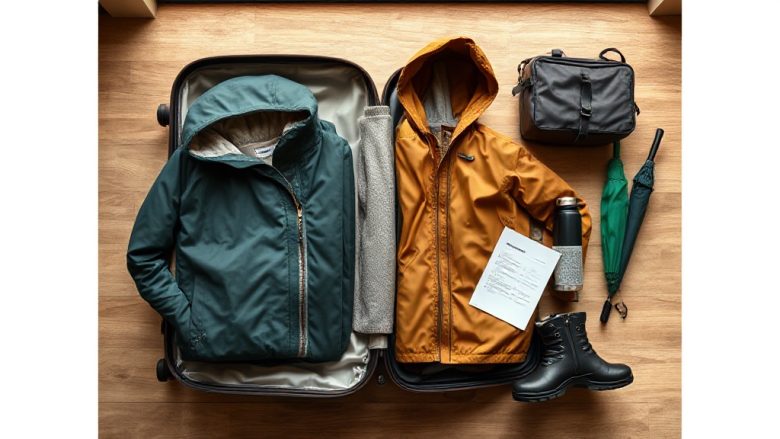
You check the forecast the night before your trip and it promises sunshine. By lunchtime the next day you’re walking through sideways rain with wet ankles and a jacket that’s soaked through. That’s the UK for you, and it’s exactly why normal packing advice falls apart here. A complete guide to travel packing in the UK has to start with one uncomfortable truth: the weather doesn’t obey the forecast, and the only packing method that survives all four seasons is built on layers, flexibility and a stubborn refusal to overpack.
This guide is written for first-time domestic travellers and weekend trippers who want to travel light without being caught out. You’ll find seasonal packing lists, a layering system that actually works, and a clear answer on what to leave behind.
Why UK Weather Defeats Ordinary Packing
Most packing advice assumes a stable climate. You pack for hot, or you pack for cold. The UK doesn’t offer that deal. A single day in spring can start at 4°C, hit 17°C by early afternoon, then drop back to 7°C with a cold wind by evening. Rain arrives in short, sharp bursts rather than all-day downpours, which means you’re often caught in a shower for twenty minutes and then walking in bright sunshine an hour later.
There’s also the geography problem. Coastal towns are windier and colder than the forecast for the nearest inland city suggests. Hill country in Wales, the Lake District and the Scottish Highlands creates its own weather, and conditions at the top of a fell can be genuinely different from the car park at the bottom. Cities are warmer, but you’ll walk more than you expect, which changes what you need.
The practical consequence is simple. Packing for a fixed temperature is a losing game. Packing for a range of conditions, in layers you can add and remove, is the only approach that works whether you’re doing a city break in Bristol or a walking weekend in Snowdonia.
Four Seasonal Packing Lists for UK Travel
These lists assume a three to five day trip and a single carry-on bag. Adjust quantities up or down, but keep the structure. The point isn’t the exact items; it’s the balance between warmth, waterproofing and breathability.
Spring (March to May)
Spring is the most deceptive season in the UK. Mornings are cold, afternoons can be mild, and showers appear without warning. Pack two base layers, one mid-layer fleece or light jumper, and a waterproof shell with taped seams. Bring one pair of trousers and one pair of quick-drying walking trousers if you plan any countryside time. Add a light scarf and thin gloves for early mornings. Footwear should be waterproof, not just water-resistant, because pavements and paths stay wet for days after rain.
Summer (June to August)
Summer sounds easy, and it isn’t. A heatwave can push temperatures into the low thirties, then a week of rain can follow with highs of 15°C. Pack light cotton or merino t-shirts, one long-sleeved layer for cool evenings, and a packable waterproof that folds into its own pocket. Shorts are worth bringing, but so is at least one pair of long trousers. Sunscreen and a hat matter more than people expect, particularly if you’re walking or sitting outside. Don’t skip the waterproof. A wet summer day in a t-shirt is miserable.
Autumn (September to November)
Autumn is the season where layering earns its keep. Mornings are crisp, afternoons mild, evenings cold and damp. Bring a thermal base layer, a mid-weight fleece, and a proper waterproof jacket rather than a thin shell. Two pairs of trousers, one of them warm, covers most situations. Add a hat and gloves from October onwards. If you’re visiting anywhere rural, pack a small torch, because daylight fades fast by late afternoon and country lanes have no lighting.
Winter (December to February)
Winter packing is about warmth without bulk. Start with a merino or synthetic thermal base layer, add a fleece or wool jumper, and finish with an insulated waterproof coat. Two pairs of warm trousers, wool socks, waterproof boots with grip, hat, gloves and a scarf cover the essentials. If you’re heading to Scotland or the north of England, add a second pair of gloves and consider a thin down jacket that packs small. Snow is possible but so is mild, wet weather, so your waterproof layer still matters more than your warmest coat.
The Layering System That Handles Every UK Season
Layering isn’t complicated, but most people get it slightly wrong. The goal is three functional layers, each doing a distinct job, so you can add or remove as the day shifts.
The base layer sits against your skin and manages moisture. Merino wool is the best option because it stays warm when damp and doesn’t hold odour, but a good synthetic works too. Avoid cotton for anything active, because it soaks up sweat and stays cold. Bring two base layers for a short trip, three for a longer one.
The mid-layer traps warmth. A fleece, a light jumper or a thin down jacket all work, depending on the season. This is the layer you’ll take off and put back on several times a day, so it needs to be easy to remove and small enough to stuff into a day bag. One mid-layer is usually enough; two if you’re travelling in winter.
The outer layer blocks wind and rain. This is where UK packing lives or dies. A waterproof shell with taped seams and a hood is non-negotiable, even in summer. Look for something breathable, because a cheap waterproof that traps sweat will leave you as wet inside as the rain would outside. If you only invest in one piece of kit for UK travel, make it this one.
Footwear follows the same logic. One pair of waterproof walking shoes or boots handles most trips. Add a lighter pair of trainers for evenings if you have space. Never rely on canvas shoes in the UK; they take days to dry once soaked.
What to Leave Behind (and Why It Matters)
Overpacking is the single most common mistake, and it costs you more than a sore shoulder. Carry-on limits on UK trains and budget flights are strict, and hauling a heavy bag up narrow stairs in a Victorian guesthouse is nobody’s idea of a holiday.
Leave the formal outfit unless you have a specific event. Leave the second pair of jeans; one is enough. Leave the heavy books and the full toiletry bag, and decant what you need into small refillable bottles. Leave the laptop if you can, and leave the ‘just in case’ shoes that you’ve never actually worn on a trip before.
One useful rule: if you’re unsure whether to bring something, imagine carrying it for twenty minutes while walking to a train platform in the rain. If that thought is unpleasant, leave it at home. The UK rewards light, adaptable packing far more than it rewards being prepared for every hypothetical.
Your Printable UK Packing Checklist
Here’s a checklist you can copy, print or save for your next trip. It’s built around the layering system and the four seasons, so it works year-round with small adjustments.
Base layers: two merino or synthetic tops, two pairs of underwear per day for short trips, two pairs of wool or technical socks. Mid-layers: one fleece or jumper, plus a thin down jacket in winter. Outer layer: one waterproof shell with taped seams and a hood. Trousers: one everyday pair, one quick-drying walking pair. Footwear: one waterproof pair of shoes or boots, plus trainers if space allows. Accessories: hat, gloves, scarf, sunglasses, small day bag, refillable water bottle, compact umbrella. Toiletries: decanted into small bottles, plus any medication and a basic first aid kit. Documents and tech: tickets, ID, phone charger, power bank, and a small torch for rural evenings.
Pack it once, travel with it in every season, and adjust only the quantities and the warmth of your mid-layer. That’s the whole method. The UK will still surprise you with its weather, but you’ll be the one person on the platform who’s dry, warm and not carrying three bags. And that’s a much better way to see the country.