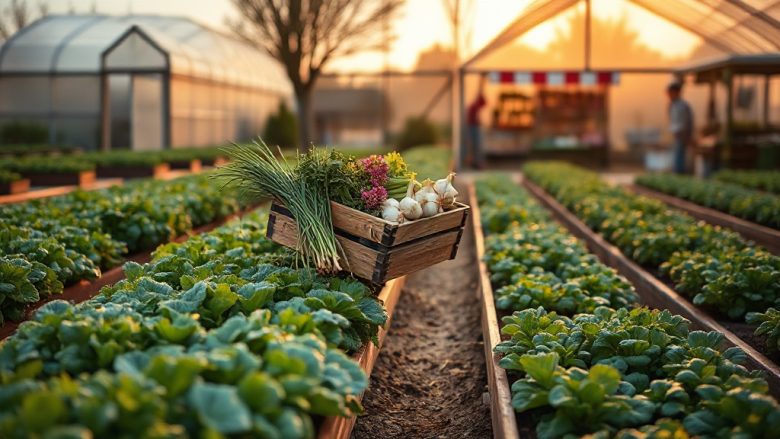
There is no single best crop to grow for profit. Anyone who tells you otherwise is either selling seed or hasn’t tried to shift a glut of courgettes in a wet August. The best crops to grow for profit are the ones that fit three things at once: a market that will actually buy them, the labour you can genuinely commit, and a shelf life long enough to survive the journey from field to customer. Get those three aligned and almost any crop can pay. Get them wrong and even a premium crop will leave you out of pocket.
This is written for people with an acre, a polytunnel and a stall on a Saturday, not a thousand-hectare operation. The maths is different at that scale, and so are the crops worth growing.
Start With the Margin Maths, Not the Crop List
Profit per acre sounds like the number that matters. It isn’t, not on its own. What matters is profit per hour of your time plus profit per square metre of ground you’ve got. A crop can earn a fortune per acre and still be a terrible choice if it eats every evening of your summer.
The simple version: take your expected yield, multiply by the price you can realistically get, then subtract your costs and the value of your own hours. Be honest about that last bit. If you’d pay someone £12 an hour to do the job, your time is worth at least that.
Say you grow salad leaves in a tunnel. A decent bed might give you 20kg over a season. Sold as loose leaf to restaurants at £8 a kilo, that’s £160. Costs might be £30 in seed, compost and water. That leaves £130 for the hours you spent sowing, watering, cutting and delivering. If it took you 15 hours, you’ve earned under £9 an hour. Not awful, but not the goldmine the internet promised either.
Now compare garlic. Plant in autumn, harvest in July. A bed might yield 15kg of bulbs. Sold as plump, cured heads at a farmers’ market for £12 a kilo, that’s £180. Costs are low, maybe £20 in seed stock. The labour is front-loaded and light. That’s roughly £160 for perhaps 10 hours of work spread over nine months. Suddenly the maths looks friendlier.
The lesson isn’t that garlic beats salad. It’s that the same ground can produce wildly different returns depending on price, yield and how many times you have to touch the crop. Work out those three numbers before you commit a bed.
High-Value Crops by Category and What They Demand
Profitable crops tend to cluster into a few groups. Each has its own trap.
Herbs and microgreens. These win on speed and price per kilo. Fresh basil, coriander, mint and pea shoots can fetch £15 to £25 a kilo sold direct. They turn over fast, sometimes in three weeks. The catch is that they demand consistent watering, a warm space, and a buyer who wants them every week without fail. Restaurants are fussy about timing. Miss a delivery and you lose the account.
Soft fruit. Strawberries, raspberries, blueberries and currants sell themselves at a stall. Punnets move quickly and customers pay a premium for local fruit that tastes of something. A well-managed strawberry bed can return several pounds per plant over a season. But soft fruit is labour-hungry at exactly the moment you’re busiest, and birds, slugs and mould all want their share. Polytunnels help. So does accepting that you’ll pick every other day in June.
Alliums and roots. Garlic, shallots, onions and beetroot store well, need modest attention, and hold their value out of season. Cured garlic in January sells for more than fresh garlic in July. That storage premium is where the profit hides. These crops suit growers who can’t be at a market every week.
Speciality vegetables. Purple carrots, heritage tomatoes, unusual squash, rainbow chard. These earn their keep by being photographable and hard to find in supermarkets. A single stall selling three tomato varieties at £4 a kilo will outsell a stall selling one generic tomato at £2.50. The premium comes from novelty and flavour, not volume.
Cut flowers. Often overlooked, but sweet peas, dahlias, cosmos and snapdragons can return more per square metre than most vegetables. They need successional sowing and cool storage, but they don’t need refrigerated transport and they don’t bruise. A bucket of mixed blooms at £15 is a strong earner for the space.
Labour, Storage and the Traps That Eat Your Profit
The most common mistake is choosing a crop because it sells well, without counting the hours it takes to get it to the point of sale.
Consider runner beans. They crop heavily and customers love them. But they need picking every two or three days for six weeks, and if you skip a pick the pods go stringy and unsellable. That’s a lot of small, repetitive tasks. Compare that to winter squash: one harvest, then months of storage, then sales whenever you like. The squash earns less per plant but far more per hour.
Storage changes everything. Crops that keep, like garlic, onions, squash, potatoes and dried beans, let you sell when prices are high rather than when you’re exhausted. Crops that don’t keep, like salad, soft fruit and fresh herbs, force you to sell immediately at whatever price the market offers that day. If you have limited time, lean toward storage crops. If you have a reliable weekly market and a cool room, the perishable crops can pay better.
Watch for hidden costs too. Packaging adds up fast. Punnets, labels, bags and boxes can quietly take 10 to 15 per cent off your margin. Delivery mileage is another one. Selling to a restaurant three miles away is very different from one thirty miles away.
And be wary of crops that need machinery you don’t own. A bed of carrots is cheap to grow until you need to wash and bunch them at scale. A field of wheat is profitable only if you already have the combine.
A Practical Shortlist to Start With
If you’re starting small and want crops that pay without swallowing your life, these are worth trialling. Grow a little of each in your first season and see what your market actually rewards.
- Garlic — low labour, stores for months, strong margin when sold cured.
- Salad leaves — fast turnaround, high price per kilo, suits a tunnel and a weekly market.
- Strawberries — premium price, excellent stall appeal, but plan for picking labour.
- Cut flowers — high value per square metre, no cold chain needed.
- Winter squash — one harvest, long storage, steady autumn and winter sales.
- Herbs — quick cash if you can guarantee weekly supply.
Don’t plant all six at once. Pick two that match your time and your nearest market, grow them well, and work out your real hourly return before adding more.
Choosing Based on Your Own Situation
The reason there’s no universal answer is that the variables are personal. A grower with a farm gate and passing tourists can sell fresh strawberries at a premium that a grower selling wholesale never sees. A grower with a full-time job needs storage crops that don’t demand daily attention. A grower with a restaurant round can justify delicate herbs and unusual vegetables that a market trader couldn’t shift.
So before you order seed, answer three questions. Where will I sell this, and at what price? How many hours a week can I genuinely give it during its busiest period? And how long can it sit before it becomes worthless? The crop that satisfies all three is your best crop to grow for profit, whatever the internet says.
Start small, measure honestly, and let your own numbers guide the next season. The best crop is the one that fits your land, your market and your life, not someone else’s spreadsheet.