Two summers ago I booked a place that described its pool as a “family splash area.” The photos were shot from an angle that made a paddling pool look like a lagoon. We arrived, the kids already in swimsuits, and found a shallow decorative pond with three koi in it and a sign asking guests not to enter. That was the day I stopped trusting the phrase “family friendly.” It means almost nothing on a booking page. Every hotel with a bath towel and a high chair claims it.
So now I run the same checklist every time I search for family friendly hotels with pools. It takes ten minutes and has saved us from at least four disappointing stays since. If you have young children, the pool is usually the whole point of the trip. Here is what to verify before you pay a deposit.
Start With the Pool Itself, Not the Photos
Hotel photography is designed to flatter. A wide lens makes a 40-centimetre-deep plunge pool look swimmable. A dusk shot hides the fact that the water is unheated and the surrounding deck is full of sharp edges. Before anything else, find out what the pool actually is.
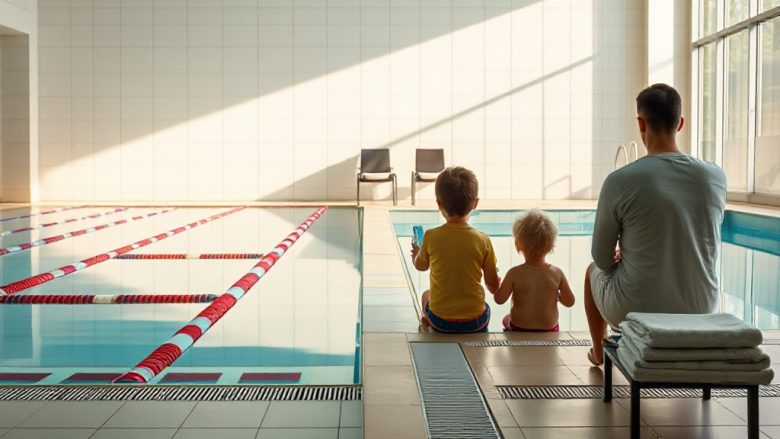
Ask for the depth at both ends, in writing if you can. Toddlers need a shallow section they can stand in, usually under 60 centimetres. Older kids who can swim want a deeper end, but you want to know where the drop-off sits and whether it is marked. A pool that goes from ankle-deep to two metres with no gradual slope is a different experience from one with a proper shallow shelf.
Then check the shape. Ladders and steps are fine for adults. Young children do better with wide, gently graded entry steps or a beach-style slope. If the only way in is a vertical ladder over a tiled edge, you will spend the whole session lifting a slippery child in and out.
One more thing: ask whether the pool is shared with a spa, a gym, or a neighbouring apartment block. A pool that looks peaceful at 9am can turn into a birthday party at 3pm. That is not automatically bad, but you should know what you are booking.
Indoor, Outdoor, and the Heating Question
Outdoor pools are wonderful in July. In April, October, or anywhere with a sea breeze, an unheated outdoor pool is a ten-minute activity followed by chattering teeth and a hot bath. If your trip falls outside high summer, heating is the single most important question you can ask.
Do not accept “heated” as an answer. It can mean anything from a solar cover that takes the edge off to a properly warmed pool kept at 30 degrees. Ask for the actual temperature and whether it is maintained all season or only in peak weeks. Some hotels switch the heating off in shoulder season and forget to mention it.
Indoor pools solve the weather problem but create others. Chlorine levels tend to be higher in enclosed spaces, and the air can be heavy for children with sensitive lungs. Ask whether there is ventilation and whether the pool is saltwater or chlorine. Neither is automatically better, but you will want to know which one your child tolerates.
If you are travelling with a baby or young toddler, also check the pool’s opening hours. Many indoor pools open late and close early, which can wipe out the two windows when your child is actually happy to swim.
The Room Layout Matters More Than You Think
A pool is only usable if the rest of the stay works. The room layout is where family friendly hotels with pools often fall down quietly. A standard double with a travel cot wedged beside the bed is technically family accommodation, but it is not restful for anyone.
Look for a proper separation: a second bedroom, a sliding partition, or at least a distinct sleeping alcove. This matters most if your child naps, because you will want to sit somewhere that is not the same room as a sleeping toddler. It also matters at 6am, when the whole family is awake and nobody wants to whisper.
Check the floor. Tiled or hard flooring is easier to clean after a wet swim, but it is unforgiving for a crawling baby. A rug or carpet in the sleeping area is a small detail that makes a real difference.
Balcony safety is worth a specific question. A balcony with a low rail and climbable furniture is a hazard for a curious four-year-old. Ask whether the balcony door locks from the inside and whether the rail height meets current safety standards. If the answer is vague, assume the worst and plan accordingly.
Safety Around the Water: What to Confirm
No hotel pool is a substitute for your own supervision. That said, some pools are safer by design, and it is fair to ask about the basics before you book.
Find out whether there is a lifeguard on duty and, if so, during which hours. Many hotel pools are unguarded, which is fine, but you should know so you can plan your own attention. Ask whether there is a fence or locked gate between the pool and the rest of the grounds. A pool that opens directly onto a restaurant terrace is a different risk from one behind a gate.
Check the pool deck for slip resistance. Polished tiles around a pool are a common cause of nasty falls, especially with wet, running children. If you can, look at guest photos rather than the official shots. Real photos show the deck, the depth markings, and the actual state of the water.
Finally, ask about pool toys and floatation aids. Some hotels provide them, some ban them, and some simply do not have any. Bringing your own armbands or a small ring takes up almost no luggage space and removes the uncertainty.
Timing Your Booking So the Pool Is Actually Usable
When you book matters almost as much as where. School holidays fill family friendly hotels with pools to capacity, and a crowded pool is a stressful pool. If you can travel slightly outside peak weeks, do it. The water is quieter, the sunbeds are free, and your child has room to practise swimming without being bumped.
If you are locked into school holidays, book early and ask about pool capacity. Some hotels limit the number of people in the pool at once, which is good for safety but means you may need to reserve a slot. Others have a second, quieter pool that families overlook. Ask which pool is usually least busy in the morning.
Check-in day is worth planning too. Pools often close for cleaning at set times, and arriving at 4pm to find the pool shut until 6pm is a miserable start. Ask for the cleaning schedule before you choose your arrival time.
And if the pool is the main reason for the trip, say so when you book. A short note asking for a room near the pool, or away from it if you have a light sleeper, is usually honoured when the hotel knows why it matters.
Questions Worth Asking Before You Pay
You do not need a long list. Five or six questions cover most of the risk. Ask for the pool depth at both ends, the water temperature if heating is claimed, the pool opening hours, whether there is a lifeguard, and what the sleeping arrangement actually looks like. Then ask one open question: what do families usually complain about here? The answer is often more useful than anything on the booking page.
Get those answers in writing, even if it is just a chat message. It gives you something to point to if the reality does not match. Most hotels are honest. The problem is usually that “family friendly” is a marketing phrase, not a specification, and nobody has thought to define it.
Once you have your answers, the search gets much faster. You can rule out half the listings in an afternoon and focus on the handful that genuinely work for young children. That is how family friendly hotels with pools stop being a gamble and start being a holiday.
Frequently Asked Questions
What depth of pool is safe for a toddler?
A shallow section of around 30 to 60 centimetres is manageable for a toddler who can stand, but you still need to be within arm’s reach at all times. Anything deeper requires constant hands-on support. Ask for the exact depth rather than trusting a photo.
Is a heated pool worth paying extra for?
If you are travelling outside July and August, yes. An unheated outdoor pool is often too cold for young children to enjoy for more than a few minutes. Confirm the actual temperature and whether heating runs all season, not just in peak weeks.
How do I check a hotel pool is clean before booking?
Look at recent guest photos rather than the official gallery. Clear water, visible tiles, and a tidy deck are good signs. You can also ask how often the pool is tested and when it is cleaned each day.
Should I book a hotel with a lifeguard?
A lifeguard adds a layer of safety but does not replace your supervision. Many family hotels have no lifeguard at all. If that is the case, plan to be in or beside the water whenever your child is.