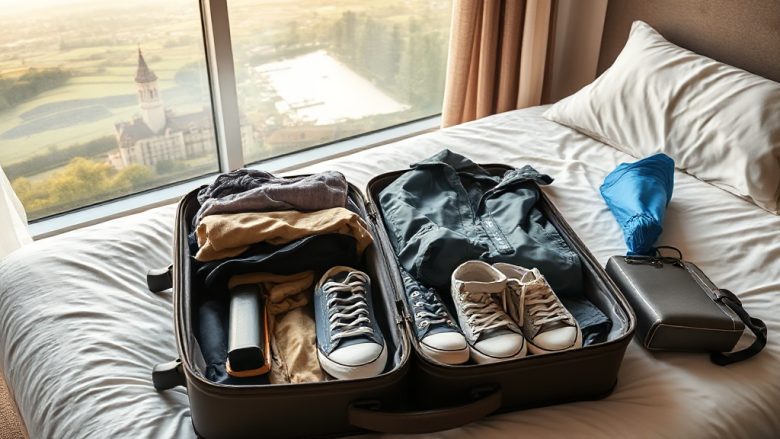
You pack for a sunny weekend in Cornwall, and by the time the train clears Exeter the sky has turned the colour of wet slate. Or you spend a bright morning in Edinburgh in a t-shirt, then spend the afternoon buying a fleece you didn’t budget for. Packing for Britain is less about the destination and more about the forecast’s habit of changing its mind. This complete guide to travel packing in the UK is the checklist I’ve refined over years of British breaks, and it’s built around one idea: layers, waterproofing, and a bag you can actually carry up a wet station staircase.
What to Pack for the UK: The Core Checklist
Start with the items that earn their place on every trip, from a two-night city break to a fortnight in the Highlands. The trick isn’t packing more; it’s packing things that work together in combinations.
Clothing: two or three base layers you can wear alone or under something, a mid-layer fleece or thin jumper, one insulated jacket that squashes flat, and one genuinely waterproof outer shell. Not shower-resistant. Waterproof, with taped seams and a hood that stays up in wind. Add trousers that dry quickly, one smarter pair if you’re eating out, and comfortable shoes you’ve already broken in. Blisters from new shoes have ruined more UK trips than rain ever has.
Accessories: a compact umbrella, a warm hat and thin gloves even in summer if you’re heading north or up hills, sunglasses (yes, really), and a scarf or buff that doubles as a neck warmer and a pillow on trains.
Essentials: a small power bank, a UK plug adaptor if you’re visiting from abroad, refillable water bottle, any medication in original packaging, and a folded tote for groceries or wet gear.
That’s the skeleton. Everything below is about adjusting it for the season and the kind of trip you’re actually taking.
Packing for British Weather Through the Seasons
British seasons don’t behave like the calendar suggests, but they do follow patterns worth planning around.
Spring (March to May)
Spring is the season of false starts. You’ll get a glorious 16-degree afternoon followed by a week of cold drizzle. Pack as though it’s late winter, then add one lighter option for the warm days. A packable insulated jacket and a waterproof shell cover almost everything. Bring shoes that cope with mud, because footpaths and parks will still be soft, and a light scarf for breezy coastal walks. If you’re doing a city break, a thin knit you can wear over a shirt works for both a museum and a pub dinner.
Summer (June to August)
This is where people go wrong. British summer can hit the high twenties, but evenings still drop, and a wet week is entirely normal. Pack for warm days and cool nights: t-shirts and shorts for the daytime, a jumper and light jacket for after dark, and a waterproof that lives in your day bag regardless of the morning forecast. Sunscreen matters more than visitors expect, especially on coasts and hills where the breeze hides the burn. If you’re camping or festival-going, add a warm sleeping layer and accept that everything you own may get damp at least once.
Autumn (September to November)
Autumn is arguably the best time to travel here, with fewer crowds and softer light, but the weather turns quickly. This is the season for proper layering: base layer, fleece, waterproof shell. Bring a warm hat and gloves for northern trips and hill walks, and footwear with grip for wet leaves on stone paths. An extra pair of socks is not overpacking; it’s insurance. If you’re planning long countryside days, a small torch or headlamp helps when the light fades by late afternoon.
Winter (December to February)
Winter packing is about warmth that doesn’t weigh you down. A good insulated coat, thermal base layers, wool socks, waterproof boots with room for thick socks, and a hat and gloves you won’t lose. Cities are manageable with a warm coat and layers, but if you’re heading to the hills or anywhere north, add waterproof over-trousers and check conditions before you set out. Short daylight hours mean you’ll often be out in the dark, so reflective details or a small light are genuinely useful.
How to Pack for Different Types of UK Trip
The same core list flexes depending on where you’re going and how you’re getting there.
City breaks. You’ll walk more than you expect, often on uneven pavements and cobbles. Prioritise comfortable shoes, a crossbody bag that sits securely in crowds, and one outfit that works for a nicer meal. A compact umbrella beats a bulky rain jacket for short hops between stations and restaurants. If you’re using trains, a bag with wheels is fine, but a backpack is easier on stairs and busy platforms.
Coastal and countryside trips. Wind is the factor people forget. A windproof layer transforms a clifftop walk, and a waterproof shell matters more than an umbrella, which will simply invert. Bring walking shoes or boots with grip, a dry bag or plastic pouch for your phone, and a warm layer even in July. If you’re self-catering, a small cool bag and a refillable bottle save money and fuss.
Camping and festivals. Assume rain and plan for mud. Waterproof boots, spare socks, a headlamp, bin bags for wet gear, and a warm sleeping bag rated for colder nights than the forecast suggests. Layers you can sleep in are worth the space. Keep electronics in a dry bag, and bring a power bank because charging points are scarce.
Visiting family or a long stay. If you have access to a washing machine, pack for a week and repeat. Fewer, better items beat a heavy bag every time. If you’re moving between several bases, a laundry kit of a travel wash line and a few detergent sheets keeps everything manageable.
Smart Packing Tips for UK Travel
Once your list is sorted, how you pack decides whether the trip feels easy or exhausting.
Roll soft clothing instead of folding it; it saves space and creases less. Use packing cubes or simple zip bags to group by category, which makes repacking on the move far quicker. Wear your bulkiest items on travel days rather than carrying them. Keep a small day bag at the top of your main bag with waterproofs, water, and snacks so you’re not unpacking everything at a station. Check the baggage rules for whichever train, coach, or airline you’re using, because allowances vary and budget fares can be strict about cabin size.
Leave a little empty space. You’ll almost certainly buy something, whether it’s a book, a jar of something local, or that fleece you didn’t think you’d need. And weigh your bag before you leave home; a bag that feels fine on your bedroom floor feels very different after a mile of wet pavement.
Finally, don’t over-plan around the forecast. British weather rewards flexibility more than precision. Pack the layers, accept that you might get rained on, and you’ll enjoy the trip regardless of what the sky decides to do. Keep this checklist saved, adjust it for the season, and packing stops being a chore and becomes the easy part of going away.