How Mandaqui’s Building Mix Shapes Its Drain Problems
Mandaqui is one of those São Paulo neighborhoods where a 1960s vila and a brand-new tower can share the same block. Walk down a street like Rua Coronel João Batista de Godoy or the lanes off Avenida Engenheiro Caetano Álvares and you will see single-family houses with tiled front walls next to glass-fronted condos. Their drains have almost nothing in common. That is the first thing I learned living here, and it is the reason I always tell neighbors to describe their building before they describe their blockage.
If you are searching for a desentupidora Parque Edu Chaves, the short answer is this: the fix depends less on the neighborhood name and more on whether your building is an old vila house, a vertical condo, or a commercial frontage. Each type fails in a different way, at a different depth, and often at a different hour of the day.
Three building types, three very different drain systems
Mandaqui grew in waves. The oldest houses went up when the area was still semi-rural, then came the mid-century vilas, then the vertical boom along the main arteries. That history is still buried in the pipes under your feet.
Older vilas and single-family houses
These homes usually have clay or early PVC laterals, shallow inspection boxes, and sometimes a second informal connection added decades later. Roots are the classic enemy here. A ficus or a large tipuana in the front yard will find a hairline crack and turn it into a mat of roots within a season. Kitchen grease and soap scum build up on the rough inner walls of old clay pipe, so you get a slow drain that suddenly becomes a backflow on a Sunday.
Vertical condos and newer towers
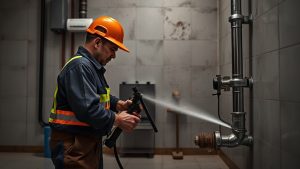
A tower has a completely different failure profile. The vertical stacks are usually fine; the problems concentrate in the basement ceiling, the garage floor drains, and the shared grease traps serving the ground-floor commercial units. When a condo calls for desentupidora Parque Edu Chaves São Paulo SP, the technician often spends more time negotiating access with the síndico than clearing the line. Hydrojetting is usually the right tool for the long horizontal runs under the garage slab.
Commercial frontages on the main avenues
Restaurants, bakeries, and small workshops along the busier corridors generate grease and sediment at a rate a residential line never sees. Their drains clog predictably, often weekly if no preventive maintenance is in place. The telltale sign is a floor drain that gurgles when the kitchen sink empties — a warning that the trap is already half full.
What actually goes wrong in each type, and how you notice it
Knowing the building type narrows the diagnosis before anyone opens a single inspection lid. Here is how the symptoms usually map out in Mandaqui.
- Old vila house: slow kitchen sink, gurgling toilet, damp patch near the front wall, or a smell in the backyard after rain. Roots or a collapsed clay joint are the usual suspects.
- Vertical condo: water backing up in the garage floor drain, recurring basement odor, or a ground-floor shop complaining about slow drainage. The shared line or the grease trap is the target.
- Commercial frontage: standing water in the kitchen, grease odor at the back door, or a floor drain that overflows during peak service. Grease and food solids dominate.
One warning worth repeating: a plunger or a bottle of caustic soda can turn a small blockage into a burst joint in old clay pipe. Never pour chemical drain cleaner into a line you suspect is cracked. It eats the pipe as readily as the clog.
Why the neighborhood’s streets matter as much as the buildings
Mandaqui sits on a slope in places, and the streets off Avenida Nova Cantareira and Rua Voluntários da Pátria carry stormwater that can infiltrate old laterals. After a heavy summer storm, a house that was fine all year suddenly backs up. That is not always a blockage — sometimes it is the public network surcharging and pushing water back through the lowest connection. A technician who knows the area will check the street level and the inspection box before assuming the problem is inside your property.
Access also shapes the job. Narrow vilas with parked cars on both sides make it hard to position a hydrojetting truck. A good local team plans for that and brings a compact reel. If you are booking a desentupidora em Parque Edu Chaves São Paulo SP, mention the street width and whether there is a garage entrance — it saves a wasted trip.
What a proper visit looks like, and what it should cost you in time
A serious technician does not start by pushing a cable blindly. The sequence matters, and you can judge a provider by whether they follow it.
- Ask about the building type, the symptoms, and when they started.
- Locate and open the inspection boxes to see which segment is backing up.
- Choose the tool: auger for a simple local clog, hydrojetting for grease and scale, camera inspection for a suspected root or collapse.
- Clear the line, then flush and confirm flow before closing up.
- Advise on prevention — a grease trap schedule, root treatment, or a joint repair.
Most residential jobs in Mandaqui are resolved in a single visit. Complex condo lines or a collapsed clay joint may need a second appointment and a repair quote. The cheapest call is often the one that returns a week later, so ask whether the provider guarantees the clearing. Emergency service at night or on a weekend is normal for a neighborhood this dense, and a reputable company will confirm the price before starting.
What to watch for before you book
Living here long enough teaches you a few local lessons. First, a recurring clog in the same spot is never bad luck — it is a defect, a root, or a belly in the pipe, and it will keep returning until someone inspects it with a camera. Second, if you are in a condo, get the síndico involved early; the blockage is often on the shared line, and the cost belongs to the building, not to one apartment.
Third, keep a simple record. Note the date, the symptom, and which drain backed up. When you call a desentupidora Parque Edu Chaves team, that history tells them more than a long explanation on the phone. Fourth, do not ignore a smell. A sewer odor in a basement or a backyard is a sign of a dry trap or a broken seal, and it is far cheaper to fix before it becomes a backup.
When you are ready to book, describe your building first, then your symptom, then your street access. A local provider will recognize the pattern immediately — the old vila with the ficus, the tower with the garage drain, or the bakery with the grease trap. That is how Mandaqui gets its drains fixed properly, one building type at a time.